George Burbank and Rose's remarriage
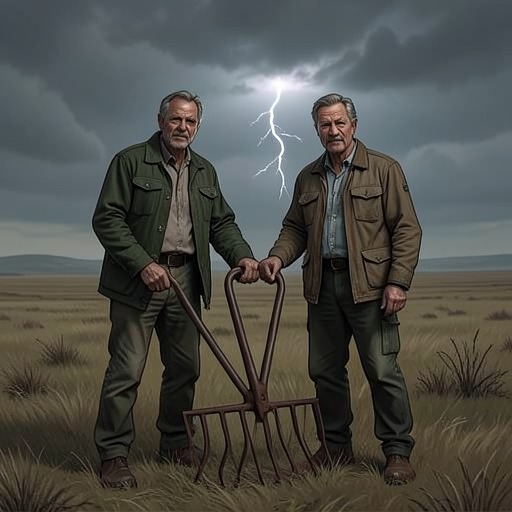
The Power of the Dog (Thomas Savage Edition)George Burbank and Rose's remarriage changes the household at the ranch: George now has a wife and stepson, while Rose enters a family whose established habits Phil treats as inviolable. The marriage becomes visible not only in the couple's new domestic life but in Rose's attempts to please George and Phil's growing hostility toward what their union has brought into his world.
A Changed Household
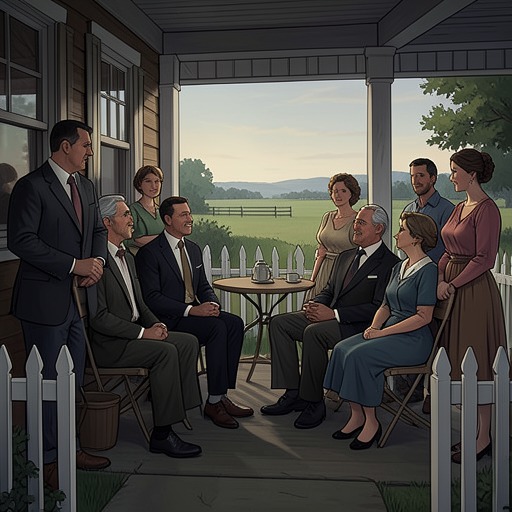
After the marriage, George began dressing for supper in a clean shirt, while Phil continued to come to the table as he always had. Phil read the contrast as evidence that Rose expected a more polished kind of life than a ranch should allow, and he mocked her for dressing carefully and wearing something around her head that she apparently believed looked pretty. His contempt turned an ordinary change in household custom into a contest over who could define life at the ranch.
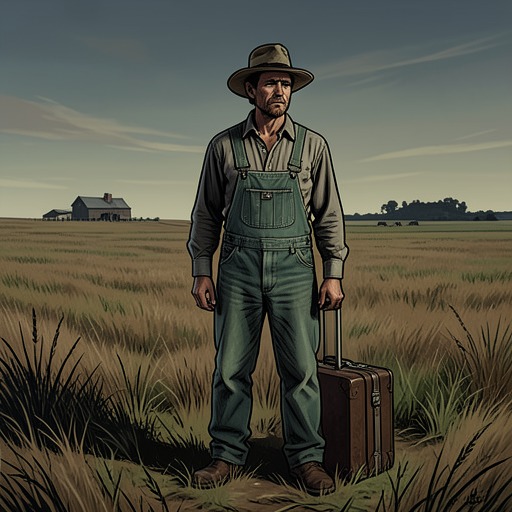
The marriage also connected George to Rose's son. Phil treated the prospect of a stepson living at the ranch as one more consequence of George's decision, resenting the new family tie rather than welcoming it. George's repeated trips to Herndon to see the boy became part of Phil's complaint about the marriage, which he saw as drawing his brother away from the ranch's old routines.
Rose's Effort to Please George
Rose's flower arrangement was an especially deliberate response to her uncertain place in the household. Feeling that she had lost her identity, she assembled a work from unusual materials she had first noticed through George's binoculars, near the woven-wire fence enclosing the horse pasture below the house. She treated the arrangement of overlooked fragments as an artistic act, drawing a parallel between its components and the line and color of painting, the sounds of music, and the elements of perfume.
The work was meant to please and surprise George, as were her piano playing, her careful dress for dinner, and a picnic she arranged beside the road. George had never seen anything like the arrangement; he blushed, considered his words, and told her he thought it was pretty. Rose answered that prettiness was not quite what she had in mind, but that she had hoped he would like it, adding that she had made similar things before. Her skill and her reply suggest that the gesture was not simply an attempt to adopt a new domestic role: it also recalled a creative practice that belonged to her before the marriage.
Phil's Resentment and the Marriage's Consequences
Phil made the marriage a target of both ridicule and private anger. He mocked Rose's piano playing, performing the piece correctly after she stumbled through it, and she eventually stopped playing whenever he was nearby. He also noticed her hands shaking as she poured coffee and took her distress as self-pity rather than as a response to his treatment. These episodes show how his opposition reached into daily life, making Rose's efforts to settle into the household vulnerable to humiliation.
In his judgment of other men, Phil treated sexual desire and marriage as forces that led people to ruin. He placed George among men who had made themselves unhappy by marrying, and resented the stepson who would now be at the ranch. The marriage thus deepened the divide between the brothers: George's new family life altered his habits and obligations, while Phil's insistence on the old order made Rose and her son objects of hostility. For Rose, the marriage brought a life she tried to shape through art and attentiveness; for Phil, it represented a change he refused to accept.